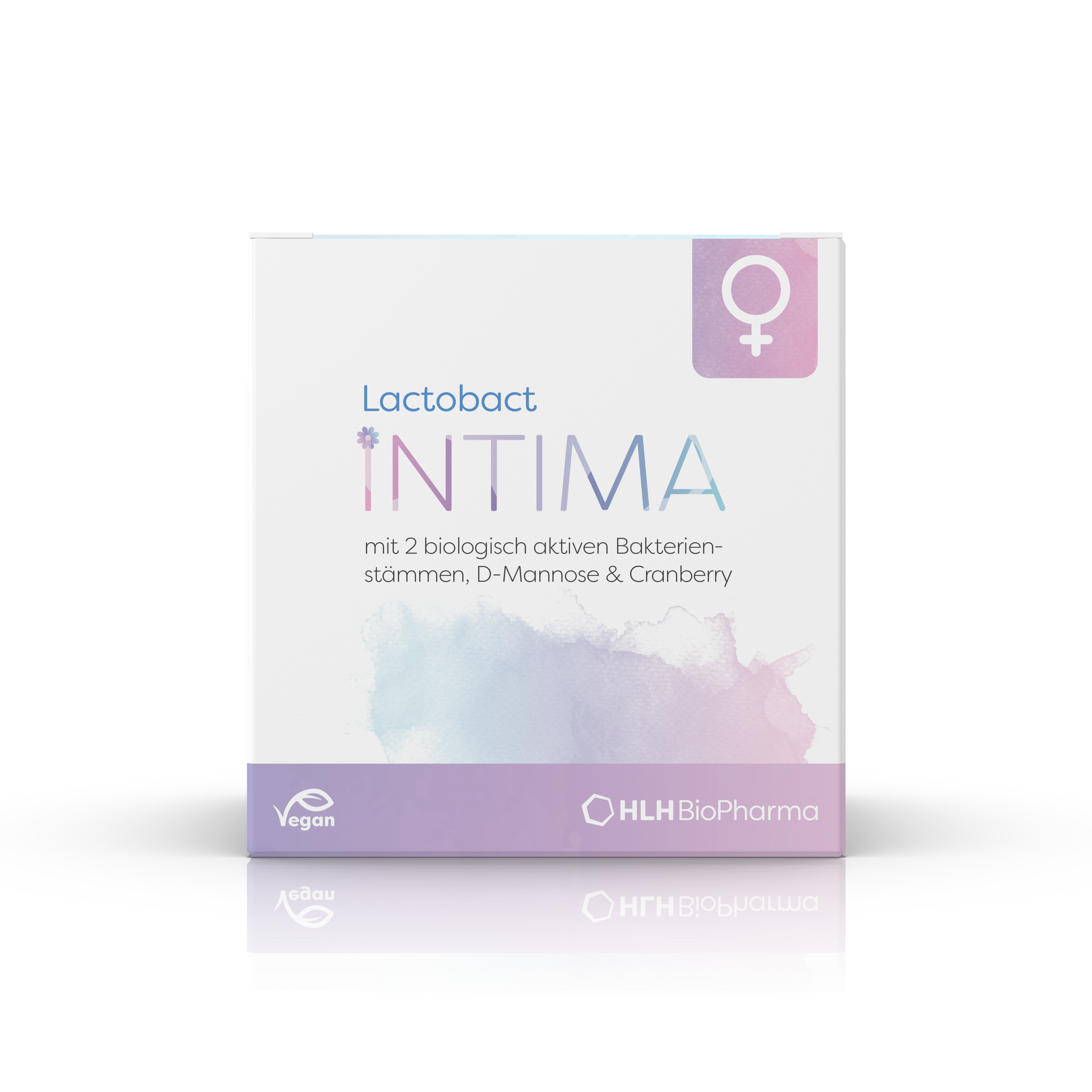
Produktbild schräge Ansicht des Lactobact INTIMA mit rosa-lilafarbenen Aquarell Wasserfleck und Venussymbol auf der Verpackung. 30 Kapseln

Lactobact INTIMA

30 capsules
EUR 29,80 €
Skip to product information
Produktbild schräge Ansicht des Lactobact INTIMA mit rosa-lilafarbenen Aquarell Wasserfleck und Venussymbol auf der Verpackung. 30 Kapseln

Lactobact INTIMA

EUR 29,80 € Unit price EUR 1.806,06 €/kg

Triple strength for women

With 2 billion CFU from 2 bacterial strains
With cranberries
Contains D-Mannose

From 12 years

Pharmacy quality

Scientifically tested

Made in Germany

Size

Delivery time: 1-3 working days

Also available at your pharmacy!

Lactobact INTIMA: Triple combination of bacteria, cranberry and D-mannose

Lactobact INTIMA is a pharmacy-quality dietary supplement for the supplemental supply of lactic acid bacteria, cranberry, and D-mannose. The preparation is specifically tailored to the vaginal and intimate microbiota of adolescents and adults. Lactobact INTIMA contains carefully selected lactic acid bacteria that occur naturally in the intestine and vaginal flora. The innovative capsules protect the bacteria from stomach acid and enable optimal gastric transit. In addition, microencapsulation protection, a sophisticated technology that stabilizes the bacteria and guarantees a higher survival rate than conventional products, allows the biologically active microorganisms to reach the small intestine in large numbers while still alive. Lactobact INTIMA also contains the plant-based cranberry extract and the simple sugar D-mannose. D-mannose cannot be metabolized by the body, making it suitable for diabetics. There is no increased calorie intake. The daily dose of 1 capsule of Lactobact INTIMA contains a balanced combination of carefully selected, biologically active, microencapsulated lactic acid bacteria from 2 bacterial strains with a total of 2 billion colony forming units (CFU) and can be taken conveniently.
Customers also bought:

ingredients

Cranberry (200 mg per daily dose)

Cranberry contains proanthocyanidins, which are secondary plant substances and have long been considered in traditional herbal medicine – among other things in connection with the urinary tract and bladder.

D-mannose (100 mg per daily dose)

D-mannose is a natural monosaccharide that is largely excreted unchanged in the urine. This makes it a current focus of research into urinary tract health. Since D-mannose is barely metabolized by the body, it does not contribute to energy intake.

Lactobacillus plantarum

Positive effect on the intestinal mucosa and the immune system. The microbiome and mucous membranes are supported. The physiological pH value in the intimate area is naturally promoted by the production of lactic acid.

Lactobacillus paracasei

Special defense against the pathogenic germ Staphyloccocus aureus. Has a positive effect on the intestinal mucosa and has an anti-inflammatory effect. The microbiome and mucous membranes are also supported. The physiological pH value in the intimate area is naturally promoted by the production of lactic acid.

Ingredients

Cranberry extract, maltodextrin, D-mannose, coating agent: hydroxypropylmethylcellulose,Lactobacillus plantarum, Lactobacillus paracasei, separating agent: magnesium salts of fatty acids

Produktbild Frontansicht des Lactobact INTIMA mit rosa-lilafarbenen Aquarell Wasserfleck und Venussymbol auf der Verpackung.

Application

Recommended intake:

Take 1 capsule daily.

Instructions for use:

The medication should be taken with sufficient liquid.

Storage:

Store tightly closed and in a dry place.
The product does not need to be refrigerated.

Important instructions:

The drying capsule included is not suitable for consumption.
The recommended daily intake should not be exceeded. Food supplements are not a substitute for a balanced and varied diet and a healthy lifestyle.

Frequently Asked Questions: Lactobact INTIMA

What are the benefits of Lactobact INTIMA?

Lactobact INTIMA combines carefully selected ingredients that have been studied in relation to the natural balance of the intimate flora. The vaginal mucosa is normally colonized by lactobacilli, which create an acidic environment through the production of lactic acid. This environment contributes to maintaining a natural pH and thus supports the balance of the vaginal flora. Changes in pH can influence the composition of the microorganisms. Lactobacilli are also a focus of scientific research because they produce various metabolites that are considered related to the stability of the microbial environment. Another ingredient is cranberry extract, traditionally valued in botany. It contains a variety of secondary plant substances such as polyphenols and proanthocyanidins, which are the subject of current research to support urinary tract health. The formula is complemented by the natural simple sugar D-mannose. This is hardly metabolized by the body, excreted largely unchanged in the urine, and is being investigated in studies related to bladder health.

Can I also take Lactobact INTIMA as a preventative measure if I suffer from frequent, recurring bladder and urinary tract infections?

Lactobact INTIMA can generally be taken regularly. Many women choose to support their vaginal flora on a long-term basis – especially if they want to maintain a stable microbial environment in the intimate area. Its ingredients, such as lactobacilli, cranberry, and D-mannose, are scientifically proven to balance the intimate flora and promote general urinary tract health. However, if symptoms recur, it is recommended to seek additional medical advice.

How can I further strengthen my bladder health?

Keep warm and wear cotton instead of synthetic clothing. Pay particular attention to keeping your feet warm. Increase the amount you drink. Prefer water or unsweetened herbal teas. Regularly flushing the urinary tract helps to "flush out" germs. You should drink at least 2.5 liters a day. Maintain good hygiene; excessive washing, douching or using alkaline soap can be harmful. Go to the toilet quickly after sex and empty your bladder. This will quickly flush out bacteria. Exercise regularly. Sitting for long periods of time restricts blood circulation, including in the intimate area, and can therefore be detrimental to your health. Reduce stress, get enough sleep and eat a balanced, low-sugar diet.

Bauch und obere Beine einer Frau mit weißer Unterwäsche und rosa Blume in der Hand

Recurrent cystitis – a common problem in women

Many women suffer from recurrent cystitis, which can be not only unpleasant but also a burden on everyday life. The causes are varied: In addition to anatomical abnormalities, hormonal changes, stress, diet, sexual behavior, and even a weakened immune system all play a role.

Influence of microbiota and mucous membranes

The intestinal and vaginal flora are a crucial factor for bladder and intimate health. If this balance is disrupted (known as dysbiosis), unwanted germs can more easily colonize. Research shows that lactobacilli, in particular, play an important protective role by maintaining an acidic environment and thus forming a natural defense system.

Natural approaches to support

In addition to the classic therapy with antibiotics, various supportive measures are coming into focus, which are discussed in studies and experience reports:
• Probiotic cultures
Certain lactic acid bacteria can help stabilize the vaginal flora and promote a healthy pH environment.
• Cranberry extracts
Rich in secondary plant substances (proanthocyanidins), which are associated with urinary tract health.
• D-Mannose
A simple sugar that is excreted unchanged in the urine and is being researched for possible supportive effects on the urinary tract.
• Phytotherapy
Medicinal plants such as bearberry leaves, nasturtium or horseradish root are traditionally used for urinary tract problems and are part of many naturopathic approaches.
• Nutritional therapy & orthomolecular medicine
A balanced diet with sufficient fluids, vitamins, and minerals can support the body's immune system. Vitamin C, zinc, and certain secondary plant substances are particularly the focus of scientific discussion.
• Lifestyle & Prevention

Drinking plenty of fluids (water or unsweetened tea), urinating regularly, practicing proper intimate hygiene, and avoiding hypothermia are considered proven basic measures.
Recurrent cystitis is a complex interplay of various factors. While antibiotics are often essential, probiotic cultures, botanicals, orthomolecular approaches, and targeted nutritional therapy can make an important contribution to supporting urinary tract health.

Research results indicate that a holistic view of the vaginal and bladder microbiota can be crucial for preventing long-term symptoms